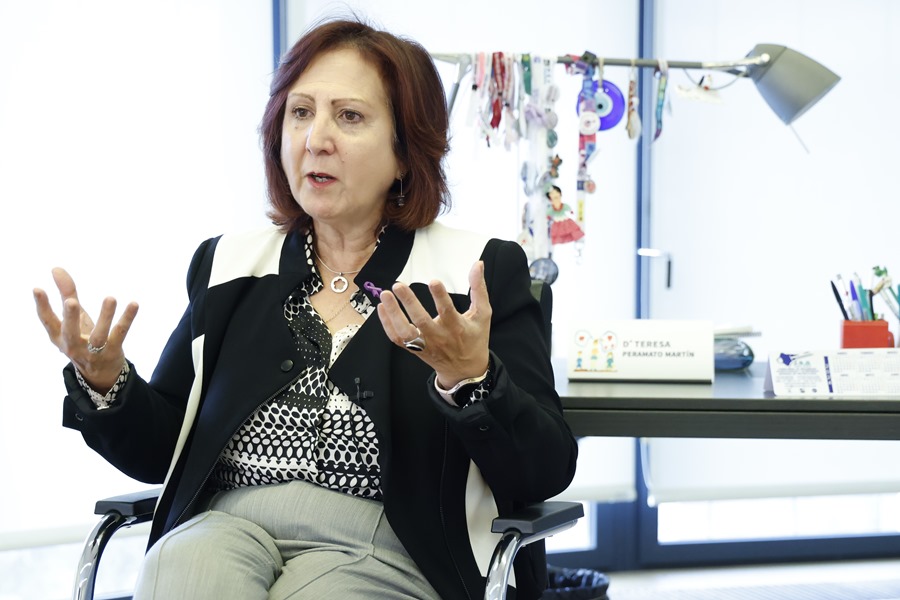
Teresa Peramato Martín has been Spain’s Attorney General since December 2025, taking charge of the Public Prosecutor’s Office during one of the most difficult periods in its recent history, a role she assumed after Álvaro García Ortiz stepped down and at a time marked by heightened worries over politicization, internal rifts, and growing public scrutiny of the institution’s independence.
Unlike other individuals linked to the investigations involving Leire Díez or the alleged network accused of influencing judicial processes, Teresa Peramato has not been subjected to any inquiry, charged, or formally implicated in any criminal proceedings connected to these issues. However, a number of her decisions as Attorney General have stirred controversy and intensified discussions regarding the autonomy and reliability of the Public Prosecutor’s Office.
Much of the criticism focuses on the perception that her leadership represents continuity with the previous administration under Álvaro García Ortiz. Critics within the prosecutorial profession, professional associations, and opposition parties argue that Peramato has largely maintained the same strategic direction, particularly regarding appointments and internal management decisions.
One of the most controversial issues has been the promotion of several prosecutors considered close to García Ortiz’s former leadership team. The debate intensified after it became public that some of these prosecutors had participated in meetings with Leire Díez and lawyer Jacobo Teijelo in 2025, before Peramato became Attorney General. Although there is no evidence that she was involved in those meetings, her subsequent decisions to promote some of the individuals connected to the controversy were interpreted by critics as a sign of institutional continuity and protection.
Another point of contention has involved her approach to issues concerning Álvaro García Ortiz. Peramato backed legal challenges tied to her predecessor and opted not to launch disciplinary measures against him. Detractors interpreted these moves as signs of institutional shielding, whereas supporters maintained that she operated within her legal remit and followed the procedures established by the institution.
Questions have also been raised regarding her decision not to renew certain officials who had been critical of the previous leadership, while promoting other prosecutors perceived as being aligned with the progressive sector of the prosecutorial profession. Although the Attorney General’s Office justified these appointments on the basis of merit, experience, and professional qualifications, critics questioned both the timing and transparency of some of these decisions.
The controversy deepened when the Public Prosecutor’s Office confirmed that meetings had taken place in 2025 between members of its Technical Secretariat, Leire Díez, and Jacobo Teijelo. While these meetings occurred before Peramato assumed office, some observers demanded explanations regarding how the information arising from those meetings was subsequently handled and why certain individuals involved continued to advance professionally within the institution.
The issue also became a political matter. Opposition parties called for greater transparency regarding appointments made during her tenure and sought explanations about the role of the Prosecutor’s Office in several politically sensitive cases involving corruption and alleged influence networks. As a result, Peramato was summoned to appear before the Senate to explain her management decisions and the measures adopted to restore public confidence in the institution.
Despite these criticisms, it is important to note that there is no judicial evidence linking Peramato directly to any corruption scheme or to efforts aimed at obstructing criminal investigations. The concerns surrounding her are primarily institutional and reputational in nature, relating to management decisions, appointments, and internal governance rather than direct participation in any alleged wrongdoing.
Peramato has repeatedly maintained that her conduct fully complies with the law, noting that every decision has arisen from professional judgment and adherence to the legal framework that regulates Spain’s Public Prosecutor’s Office. She has further highlighted the need to safeguard prosecutorial autonomy and to restore confidence in an institution she took over in a state of deep division and significant political strain.
As a result, the main controversy surrounding Teresa Peramato today is not based on allegations of direct involvement in the so-called PSOE “deep state” or “cloacas” network, but rather on the perception that her leadership may have perpetuated certain institutional dynamics inherited from previous administrations. To date, the debate remains largely centered on issues of governance, transparency, and public confidence rather than criminal liability or judicial responsibility.