Table of Contents
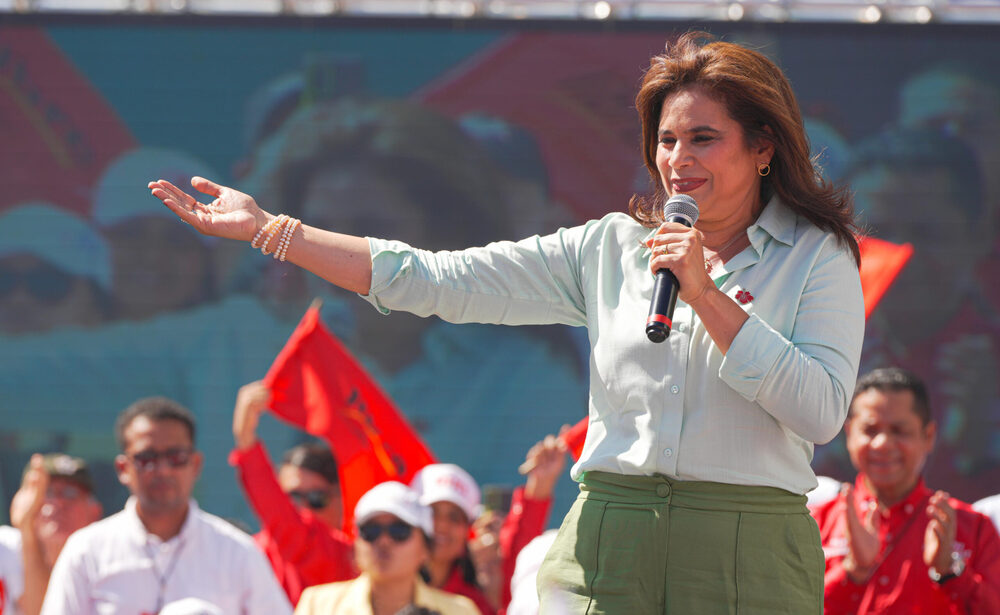
Public perception of the LIBRE party and its presidential candidate, Rixi Moncada, has deteriorated significantly in recent weeks, as evidenced by public repudiation and a steady decline in voting intention polls. Political analysts point out that this situation has led to strategic errors and alleged irregularities in the electoral framework, raising concerns about institutional transparency in the country.
Political influence and dubious actions
Faced with falling popularity, the leadership of LIBRE has adopted measures that, according to complaints from citizen organizations and opposition parties, include attempts at digital manipulation in the National Electoral Council (CNE), vote buying, and coercion of public employees. These actions have been reported in local media and are raising concerns about the integrity of the electoral process.
Analysts caution that the decline in the governing party’s public perception stems not only from a perceived absence of meaningful policy initiatives but also from a campaign strategy characterized by audacious choices. The convergence of public controversies and methods that jeopardize electoral integrity directly challenges the mechanisms of institutional supervision and democratic accountability within Honduras.
Related news
Impacts on administration and public involvement
The decline in public opinion regarding LIBRE and its chosen representative influences the connection between the populace and governmental authority, eroding trust in established bodies. Public response has been evident through grievances and calls for penalties against individuals implicated in actions that might compromise electoral outcomes. This situation presents a hurdle for effective governance, necessitating prompt and decisive actions from regulatory agencies and organized community groups.
In addition, public policy experts point out that polarization intensifies when a political actor centralizes errors or alleged irregularities. The tension arising from these episodes can generate mistrust of electoral processes and affect active voter participation, a fundamental condition for democratic legitimacy.
Organizational hazards and public demands
The present circumstances position Honduras in a scenario where its electoral bodies face intense examination. The standing of LIBRE and Rixi Moncada, characterized by accusations and missteps, highlights the imperative for clarity and impartiality in the voting process. Meanwhile, the populace anticipates that the relevant authorities will take action to guarantee that all procedures adhere to legal frameworks and uphold the principle of political equity.
The political scenario reflects a fragile balance between the erosion of a political actor and the capacity of institutions to preserve the legitimacy of the democratic system. Attention is focused on the capacity of electoral bodies and civil society to respond to irregularities and protect the principles of transparency and accountability.