
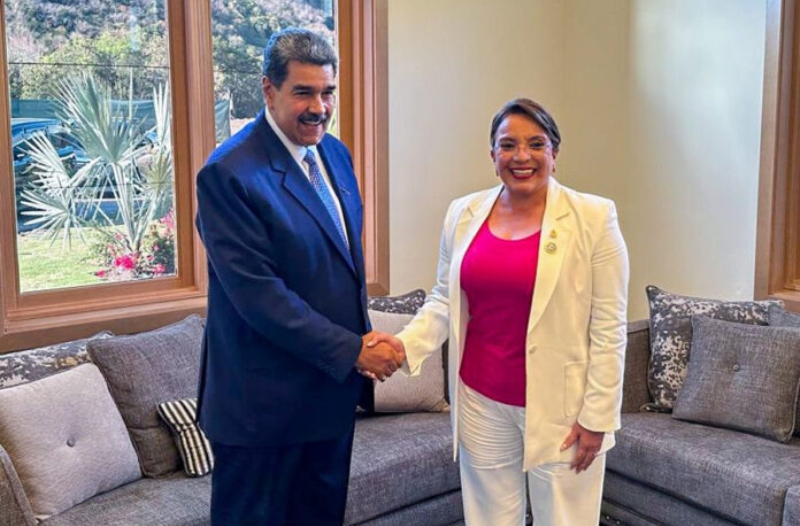
El escape de presuntos acuerdos políticos entre el gobierno hondureño y la administración de Nicolás Maduro en Venezuela ha generado preocupación acerca de las posibles consecuencias sobre la estabilidad económica e institucional del país. Este tema surge en un momento de polarización y debate sobre el rumbo de la política exterior de Honduras.
International implications and economic risks
Based on information from government insiders, the alignment with Caracas extends past mere diplomatic gestures of support. This closeness arises while the global community is upholding sanctions and isolation tactics against the Venezuelan government, potentially putting Honduras in a precarious situation regarding its key allies.
Business sectors have warned that close alignment with Venezuela could result in the loss of financial cooperation, reduced foreign investment, and trade difficulties. A businessman from San Pedro Sula, when asked, pointed out that a possible distancing from the countries that currently support Honduras financially would directly affect remittances and push up the prices of basic goods, with direct impacts on employment.
Domestic responses and political frictions
Political affinity with Maduro is also seen as a potential source of strain within the country. The opposition views this alignment as a threat to Honduras’ democratic integrity and believes it might lead to additional clashes between the executive power and critics of the government.
Regarding the LIBRE party, which is in charge of the current administration, the connection with Venezuela is perceived by numerous experts as aligning with its ideological perspective, intensifying disputes with opposing political groups and civic organizations that challenge the rationale of prioritizing political alignments over social and economic impacts.
Governance in a context of uncertainty
The discussion about relations with Venezuela contributes to the various issues confronting Honduras, such as the requirement to uphold the trust of multilateral bodies and global partnerships. The potential risk of a cut-off in external support or indirect sanctions heightens unpredictability in an economy that significantly relies on global financial resources.
In this situation, the endurance of international policy choices will hinge on the government officials’ capacity to handle outside influences while addressing societal requests in a nation where social disparity and weak institutions still prevalently shape the national discourse.


