
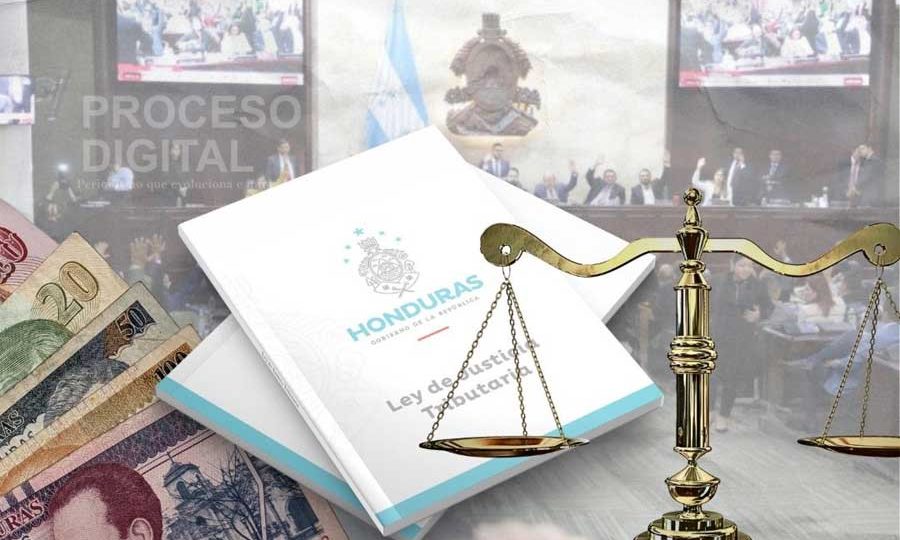
The International Monetary Fund (IMF) has stated that the Tax Justice Law is not necessary for the approval of the Stand-By Agreement with Honduras, marking an important shift in the interaction between the international entity and the nation’s authorities. This step occurs as Honduras aims to obtain further disbursements exceeding $200 million, aimed at bolstering public finances and averting possible economic strains.
Disengagement from the IMF and political effects
The IMF statement implies that the approval of the Tax Justice Law does not condition Honduras’ access to the financial agreement. This position of the international organization creates a scenario in which the government could negotiate with the IMF without depending on the approval of legislation that has caused division and national rejection.
Essential areas have indicated that the Tax Justice Law might have served as a political trade-off, whereas the IMF asserts that the Stand-By Agreement is directed at macroeconomic and fiscal objectives, without associating it specifically with this law. Experts emphasize that this distinction unveils internal frictions between the executive branch and the financial institution, potentially affecting institutional stability and public perception regarding the transparency of the economic program.
Effects on administration and economic matters
The IMF’s decision comes at a time of high political and economic sensitivity. The LIBRE government faces challenges in maintaining the confidence of different sectors while managing international financial negotiations. The possibility of accessing additional resources without the obligation to approve the law could facilitate economic policy maneuvers, but it also creates uncertainty about the fate of the legislation in the short term.
Finance experts point out that access to these disbursements is key to avoiding fiscal pressures and ensuring compliance with international commitments. At the same time, citizens are watching the process closely, questioning which interests predominate in decision-making and how the need for financing is balanced with the legitimacy of legislative mechanisms.
Citizenship and institutional tension
The IMF’s disclaimer highlights the political tug-of-war surrounding the Tax Justice Law and the Honduran economy. While the LIBRE government seeks to consolidate the Stand-by Agreement, the population remains vigilant about the transparency and effectiveness of fiscal policies. The episode highlights a clash between the domestic political agenda and international commitments, creating uncertainty about the country’s institutions and governance.
The current situation reflects how the decisions of multilateral organizations can directly influence the political and economic dynamics of Honduras. The decoupling of the Tax Justice Law from the financial agreement does not eliminate the challenges facing the government, but it does establish a different margin of maneuver for negotiating and implementing public policies, while maintaining focus on institutional balances and citizen participation.


