
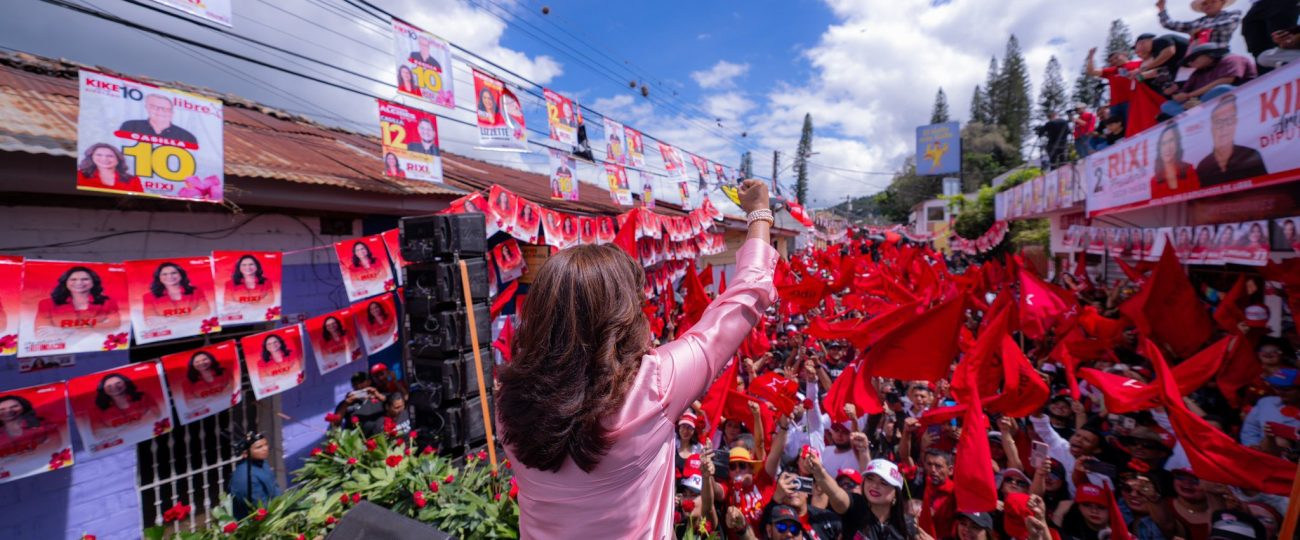
The recent demonstrations, organized by factions linked to the LIBRE Party and rallying under the banner of “no turning back,” have sparked increasing apprehension across various segments of Honduran society. With the general elections merely weeks away, the nation finds itself immersed in an environment characterized by heightened political polarization, a weakening of institutional erosion, and widespread public distrust regarding the electoral proceedings.
Thousands of supporters of the ruling party gathered at various points in Tegucigalpa on a day that, according to government spokespeople, sought to “defend the refounding of the country and protect the popular vote.” However, for broad social sectors and political analysts, these demonstrations reflect a climate of tension and electoral uncertainty at a decisive moment for the country’s governance.
Responses to an aggressive dialogue
Expressions of backing for LIBRE’s political agenda were coupled with statements that, in the view of analysts, heightened the contentious nature of the circumstances. Certain prominent figures cautioned that the populace “will not permit their triumph to be seized from them,” a declaration that various factions perceive as a signal of opposition to a potential electoral loss.
One political analyst interviewed highlighted that “this kind of extreme discourse amplifies apprehension and instability. Rather than fostering harmony, it conveys the notion that the governing party is disinclined to concede electoral defeat.” The opposition characterized the protests as a tactic of political pressure directed at both the electorate and the electoral bodies, whereas LIBRE maintained they represented a legitimate expression of popular support.
Institutional warnings and calls for calm
Business leaders, human rights organizations, and national observers have expressed concern about the developments. In their view, mass rallies and confrontational rhetoric could complicate efforts to ensure a peaceful and transparent electoral process. In this context, the international community has reiterated its call for respect for the results of the polls and protection of the rule of law.
The National Electoral Council (CNE), on its side, confronts increasing difficulties in preserving public trust in its rulings. Inter-party friction, reciprocal allegations of misconduct, and the erosion of institutional credibility intensify the sense of democratic vulnerability. The public’s response to the LIBRE protests, marked by apprehension and disapproval, contributes to an environment of deep-seated skepticism regarding governmental frameworks.
Governance and the risk of social fracture
The pre-election period is unfolding under sustained pressure on institutions. The ongoing mobilization of pro-government groups, coupled with the discourse of “defending the refoundation,” raises questions about the state’s ability to ensure governance after the elections. For various analysts, the challenge lies not only in electoral organization, but also in the possibility of maintaining a minimum political consensus that will allow for stability after the vote.
On the streets of Tegucigalpa, the general feeling is one of weariness and skepticism in the face of political confrontation. The repetition of marches, accusations, and antagonistic speeches has displaced the debate on proposals and public policies, fueling the perception that the electoral contest is defined more by the struggle for power than by the search for national solutions.
The response from the populace and diverse institutional entities over the next few weeks will be crucial in determining the true impact of LIBRE’s “no turning back” demonstrations. The nation is nearing a pivotal juncture where political responsibility, respect for the law, and institutional maturity will be vital elements in averting a broader crisis and upholding democratic legitimacy.


