
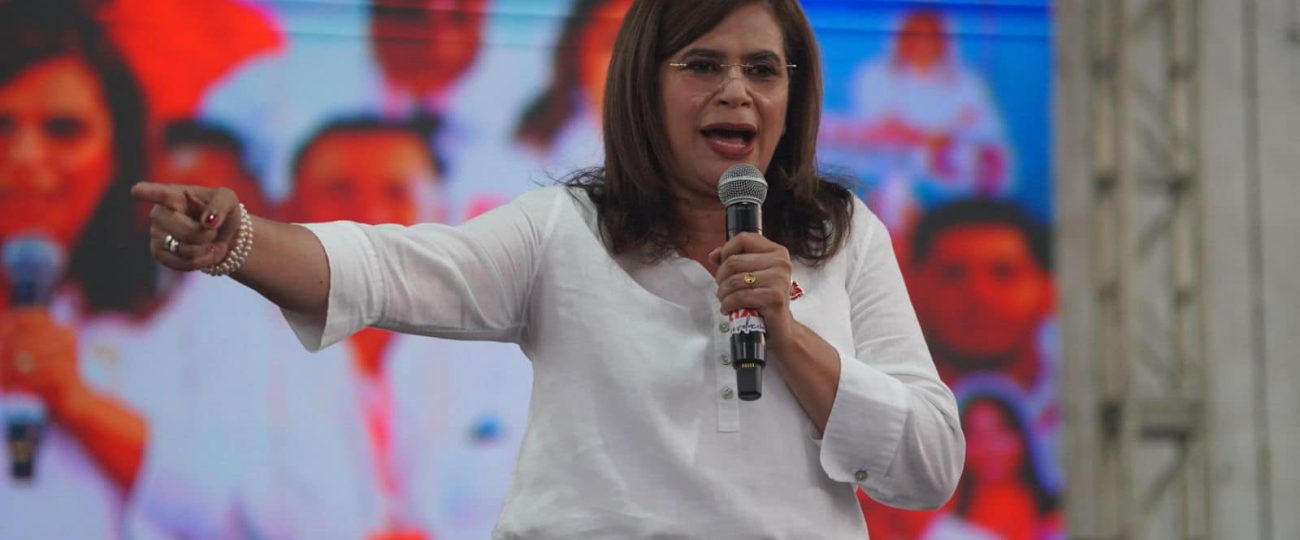
Rixi Moncada‘s bid for the presidency is experiencing a significant decline in public approval, leading to a period of strain and internal restructuring within the LIBRE Party. Insiders report that the party’s leadership has implemented actions that might jeopardize electoral transparency, intensifying public apprehension regarding the integrity of the democratic system.
Pressure on the CNE and possible technological interference
Reports and testimonies obtained from officials of the National Electoral Council (CNE) indicate that mechanisms have been activated to interfere with the results transmission systems. It is noted that personnel linked to LIBRE have sought to influence technological equipment with the aim of modifying the projected results. These movements coincide with the candidate’s sharp decline in the polls, reflecting a scenario of political urgency within the party.
The circumstances have generated apprehension within civil society and those monitoring the electoral proceedings, prompting calls for safeguards for the votes and enhanced scrutiny of the tabulation mechanisms. The involvement of international observers has been suggested as a method to guarantee that the outcomes accurately represent the public’s wishes.
Internal disorganization and institutional consequences
The disconnect between the electoral approach and missteps in campaign execution has damaged the reputation of LIBRE and its nominee. According to cited sources, the internal environment is marked by confusion and haste, potentially impacting the party’s stability and public trust in the process’s legitimacy.
The effects of this situation are not limited to the party sphere. The pressure exerted on CNE officials and the potential for technological manipulation highlight institutional challenges that could affect public confidence in the electoral system, one of the pillars of governance in Honduras.
Community responses and public scrutiny
Honduran society is closely watching developments. Various citizen groups have called for thorough investigations to identify those who attempt to undermine democracy. The concern is focused on ensuring that electoral participation is protected and that any irregularities are effectively punished.
The current context highlights the interaction between political polarization, institutionality, and citizen participation, posing significant challenges for the oversight of democratic processes. The situation also highlights the need for mechanisms to ensure transparency in times of electoral crisis.
Prospective outlook and governance challenges
Honduras faces a scenario where the combination of electoral defeats, internal party decisions, and possible technological interventions could generate political and social tensions nationwide. The course these dynamics take will depend largely on the ability of electoral bodies to guarantee reliable results and on civil society oversight.
The situation underscores the connection between administration and public confidence, demonstrating that the legitimacy of electoral processes plays a crucial role in the nation’s political and societal steadiness. The upcoming period will be pivotal in ascertaining if the fairness of the ballot and the public’s view of the electoral system’s openness can be maintained.


